How Do Dogs Smell Cancer? Your Questions About Their Noses, Answered
Why are dogs' noses so powerful, what do they smell in a breath sample, and how are they trained? Our answers to the questions we hear most about how dogs smell disease.

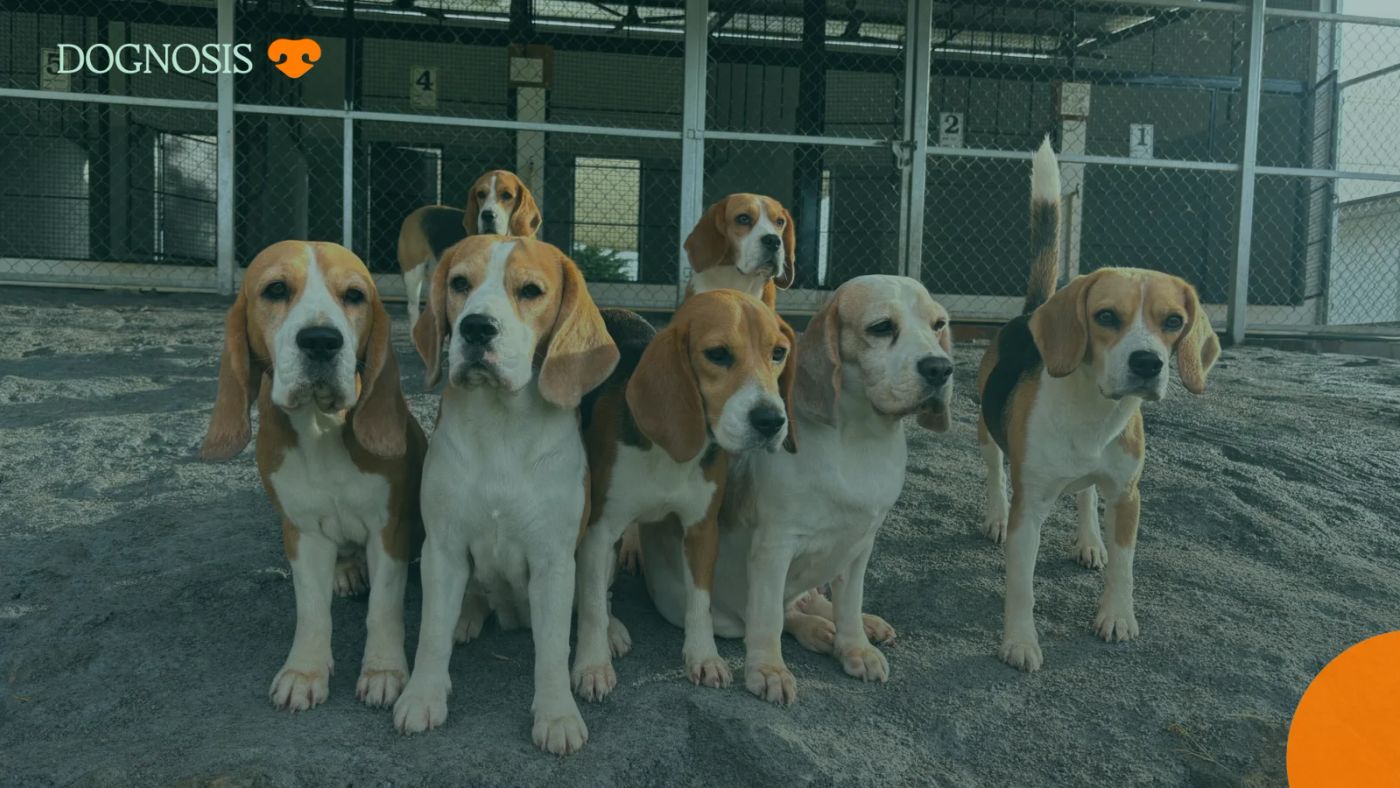
Whenever we share a video from our lab, the comments fill up with questions about the dogs. Here are your most-asked questions about how a dog’s nose works.
Why Do We Work With Dogs?
Dogs combine one of the most sensitive noses in the animal kingdom with a love of sniffing and a talent for learning, and more than 40 double-blind trials published in peer-reviewed journals have shown that they can smell diseases, including several types of cancer, in a person's scent. People already trust their noses in life-and-death settings, from search and rescue to finding explosives. Breath carries hundreds of volatile organic compounds (VOCs), and a dog's nose can pick out patterns within that mixture at parts per trillion, a sensitivity our best lab instruments, working at parts per million, have never come close to matching.
The hard part has always been reading the dogs reliably and at scale, and that's the problem our technology is built to solve. Asked on the Accelerate Bio podcast whether an electronic nose will one day replace them, our co-founder Akash Kulgod pointed out that dogs are already reliable, mobile and very good at sampling the air, and the missing piece was a good way to understand them.
What Makes a Dog's Nose So Good at Smelling Disease?
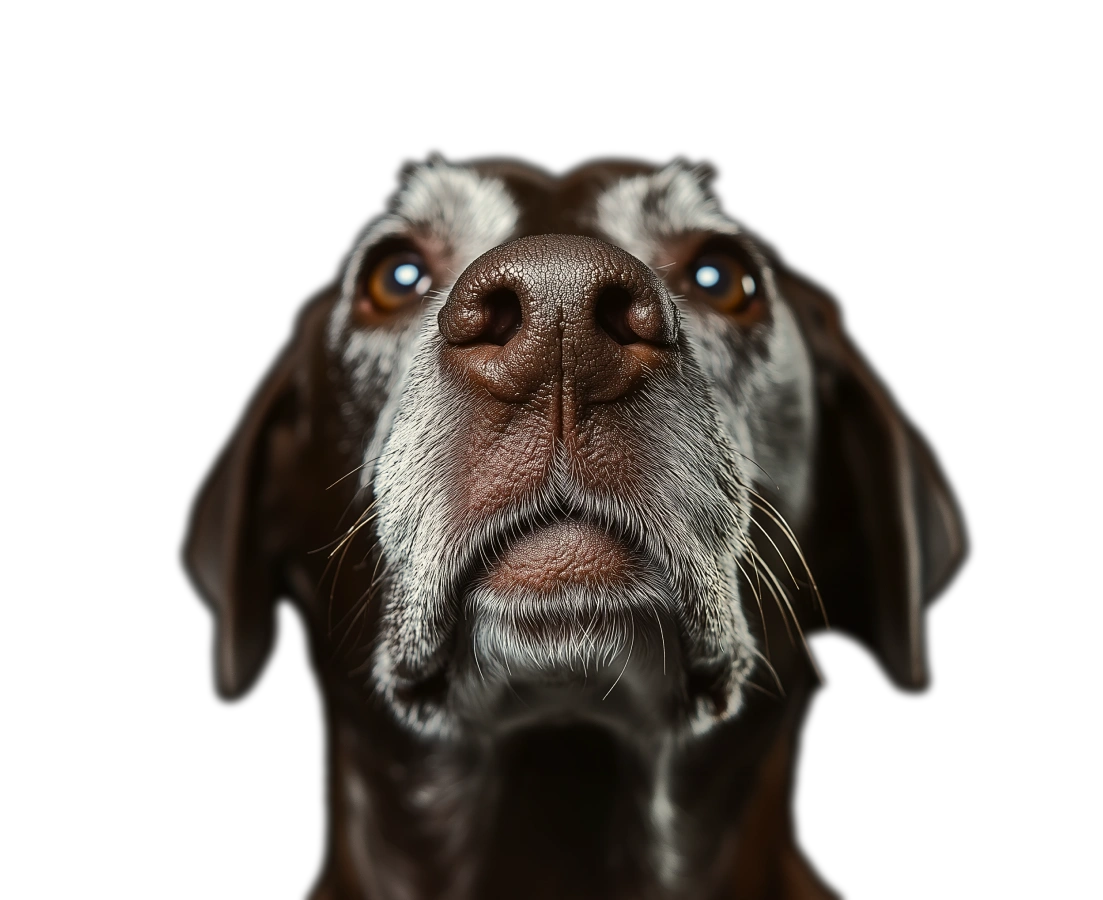
Dogs carry somewhere between 125 and 300 million olfactory receptors, against roughly 5 to 6 million in humans, and a larger share of their brain is given over to smell. Their genes tell the same story: the dog genome holds about 1,100 olfactory receptor genes, while humans have well under 400 that still work.
Even the way a dog sniffs is built for this. A sniff has its own airflow pattern, built to carry odour to the part of the nose that does the smelling, and in simulations a single sniff delivered about two and a half times more air there than quiet breathing. We go deeper into this in What a Cancer-Sniffing Dog Smells.
What Exactly Are the Dogs Smelling?
When cancer is present, the body's chemistry changes. Tumour cells release volatile organic compounds that travel through the bloodstream, reach the lungs and leave with every breath. Together, these compounds form an odour signature that differs from the breath of a healthy body, and trained dogs learn to recognise it, much as other trained dogs learn the scent of explosives. Our post Every Disease Has a Scent explains the chemistry in more depth.
Can Dogs Smell Other Diseases Too?
Yes, because many diseases change the body's chemistry in ways a trained nose can pick up. Dogs have identified children carrying malaria parasites by scent alone, even when the children had no symptoms, and two dogs trained on skin swabs told people with Parkinson's apart from people without it in a double-blind trial. During the pandemic, 27 studies across 15 countries trained dogs to smell Covid, and some assistance dogs learn their own person's smell well enough to warn them before a seizure or a dangerous drop in blood sugar. The tools we've built around our dogs could reach beyond medicine too, and Akash has talked about using them to map where explosive residue sits at a scene.
How Are the Dogs Trained?
Training starts with a simple association: the dog learns that finding a target scent leads to a reward, delivered with precision every time. Over many sessions, the dog starts searching for the scent on their own, because finding it has become rewarding in itself. We walk through each step in our post on how dogs learn.
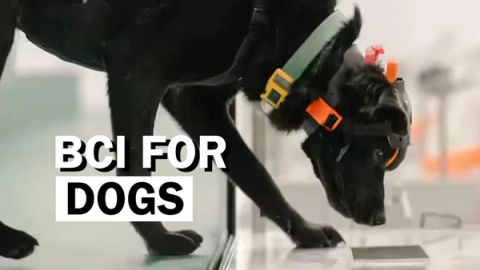
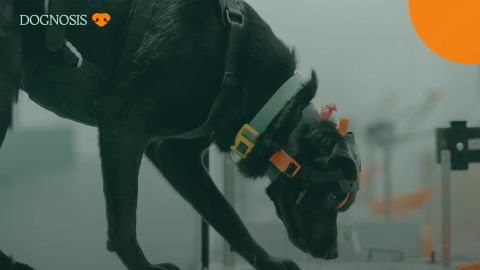
Most scent-trained dogs are then taught a fixed alert, like a sit or a raised paw, and Akash says that step alone can take up to a year. Our dogs skip it and respond naturally instead, going back to expect a reward when they think they've found the target scent, which brings training down to eight to ten weeks for most dogs. SniffSpace, our automated sniffing platform, presents up to 72 samples in a session and delivers the rewards, while DogSense helps the team see when a dog is losing focus, so they can offer a known positive sample and keep the game rewarding.
Do the Dogs Know They're Finding Cancer?
As far as the dogs are concerned, they're playing a scent game. Each dog learns that one particular pattern in a breath sample leads to a reward, so the question their nose answers is a narrow one: does this breath carry the pattern I know? They have no idea what cancer is. What they do know, very well, is that finding that smell means a treat, and that's what makes them so keen to get sniffing.
Can My Own Dog Smell Cancer?
Sometimes, but not reliably. It's how the whole field began: in 1989, two London dermatologists described a patient whose dog kept sniffing at one mole on her leg while ignoring every other mark on her body, and the mole turned out to be an early melanoma. Stories like that led researchers to start training dogs on purpose, which you can read about in our history of the field. An untrained pet has no way of telling you what they've noticed, though, and their behaviour can change for all sorts of reasons, so if something about your health worries you, the person to talk to is your doctor.
Have a question about the dogs, the science or the Dognosis Breath Test? Ask us in the comments or DMs on Instagram, and it might be answered in the next Ask Dognosis. And if you'd like to be among the first to take the Breath Test when we launch, join the waitlist.