Akash Kulgod on Accelerate Bio: Dogs, BCIs and Early Cancer Detection
Dognosis co-founder Akash Kulgod joined Michal on the Accelerate Bio podcast in October. Here is what stood out.

Imagine understanding your cancer risk by breathing into a mask for ten minutes at home. That’s the idea behind the Dognosis Breath Test, and on 22 October 2026 co-founder Akash Kulgod joined host Michal on the Accelerate Bio podcast to explain how it works, from the dogs who assess each sample to the technology that helps us understand them.
How Does the Dognosis Breath Test Work?
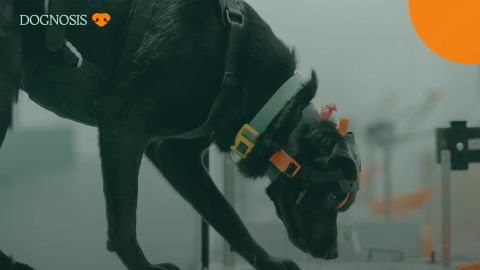
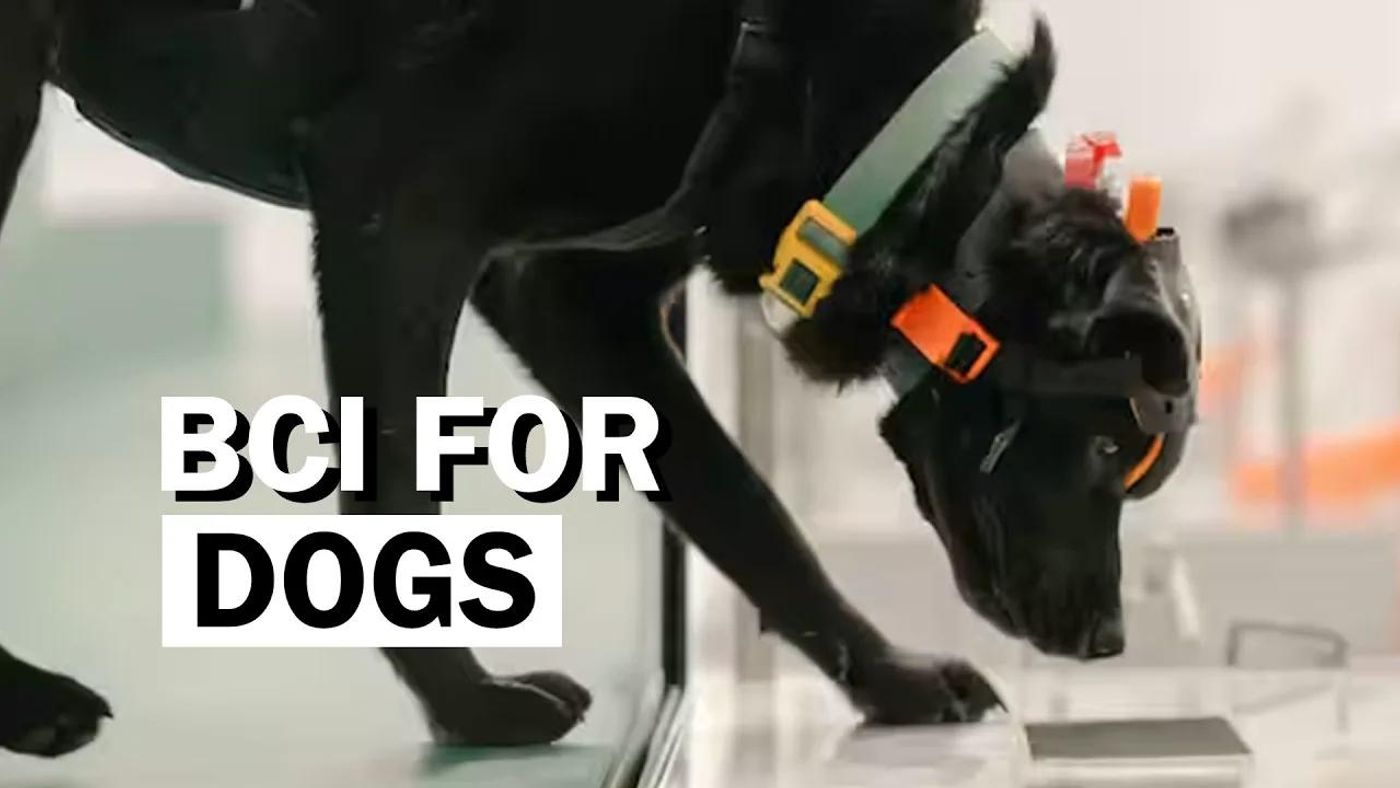
It starts at home. You breathe normally into a cotton surgical mask for 10 minutes, seal it in a bag and send it to our lab in Bengaluru, where several trained dogs assess the sample. Each dog wears DogSense, a helmet and harness Akash describes as an "Iron Dog suit", which records brain activity, breathing and heart rate while the dog sniffs. DogOS then combines the dogs' responses into a Breath VOC score, and that score comes back to you.
How Do You Know the Dogs Are Smelling Cancer?
This was the question the journal's reviewers pressed hardest, and Akash admits the team was "really paranoid" about it. Dogs are very good at finding the easiest route to a reward, so the study was designed to take every shortcut away. Controls were collected in the same rooms as cancer cases, and they included people with other chronic conditions, people from community screening camps and people whose biopsy came back benign. In the published results, the false-positive rate for people with chronic conditions was close to the rate for healthy volunteers (9.6% and 8.2%, a difference that wasn't statistically significant).
The study was published in the Journal of Clinical Oncology in April 2026. 3,275 people were enrolled, with 1,773 used to train the model and 1,502 to test it. In the testing group, the dogs and the model reached 90.8% sensitivity (the share of cancers correctly flagged) and 91.3% specificity (the share of people without cancer correctly cleared). For stage I and II cancers, sensitivity was 90.6%.
Early stages are where Akash draws the sharpest contrast with blood tests. Liquid biopsies such as GRAIL's look for fragments of tumour DNA in the blood, and Akash says they pick up fewer than half of stage I and II cancers. Akash is clear that those tests still find cancers that would otherwise be missed, but the early-stage gap is where dogs can make the biggest difference.
Why Don't the Dogs Sit When They Find Cancer?
Detection dogs are usually taught a fixed alert, like a sit or a raised paw, and Akash says that step alone can take up to a year of training. A scent is complex and a sit is a yes-or-no answer, so much of what the dog noticed gets lost along the way. Our dogs respond naturally instead, going back to expect a reward when they think they've found the target scent. Akash says this brings training down to about eight weeks for most dogs, and it lets the system pick up how confident each dog is.
The right dog, Akash adds, is more about personality than breed. The pack includes beagles and mixed breeds, and one of the strongest noses belongs to an indie and Labrador mix adopted from a shelter. Independent dogs that enjoy sniffing for its own sake tend to do best.

What Does a Brain-Computer Interface Add?
Good trainers read a lot from a dog's body, and cameras can read even more. DogSense goes a step further by recording signals no trainer can see, such as brain activity, heart rate and breathing. Akash explains that this helps the team tell how focused or motivated a dog is during a session, so they can step in at the right moment, for example by offering a known positive sample after a long run without a find.
Every sample is also assessed by several dogs, which Akash calls "the wisdom of the pack". In the published model, each dog's response counts according to how reliable that dog has been over time, so one dog having an off day doesn't decide the result. For the hardware itself, see Meet DogSense.
Why Does a 90% Accurate Test Need a Second Step?
Cancer is rare in a healthy population (Akash puts it at around 0.5% for people over 50), so even a very good test will flag more people who turn out not to have cancer than people who do. Our answer is to stack tests that look at different things. The Dognosis Breath Test sits at the top of the screening funnel and picks up metabolic signals in breath, then imaging looks for structural changes in the body, so the two tests rarely make the same mistake.
In practice, if your Breath VOC score is Elevated, a doctor reviews your report and suggests the next step, usually a CT or MRI scan of the chest, abdomen and pelvis. Dognosis covers the cost of that imaging at a partner centre and helps you book it. That is also why Akash wants the first step to be as sensitive as possible: a false positive can be ruled out at the next step, while a missed cancer never reaches it.
How Will Dognosis Scale?
The team calls it "sniffmaxxing": capturing as many high-quality sniffs as possible. Today our lab can assess hundreds of thousands of samples a year, and Akash's next milestone is more than a million a year from a pack of 20 to 30 dogs. The real bottleneck is hardware, so the team is building an automated lab with conveyor systems, automatic rewards and sensors that keep the dogs engaged.
India made sense as the place to start. Most cancers here are found late, and strong engineering talent and good medical infrastructure made it possible to run large clinical studies at pace. Today the team is 60 people and 14 dogs, and the Dognosis Breath Test will launch in Bengaluru in early 2027 before expanding to other Indian cities.
What Comes After Cancer?
The same tools can capture what a dog smells in other settings, from mapping where explosive residue sits at a scene to building a dataset of how dogs perceive odours, which Akash suggests could one day help teach AI to smell. Asked whether an electronic nose will eventually replace the dogs, Akash is relaxed: dogs are already reliable, mobile and very good at sampling the air, and the missing piece was always a good way to understand them.
Michal closes by asking what Akash wants listeners to take away. The answer is "clear-eyed optimism", a hopeful outlook that still sees the world's problems plainly, along with a suggestion to learn from the dogs, because "it's hard to find a dog who's pessimistic."