Meet DogSense
What the helmet our dogs wear records while they sniff, and what it can and can't tell us.

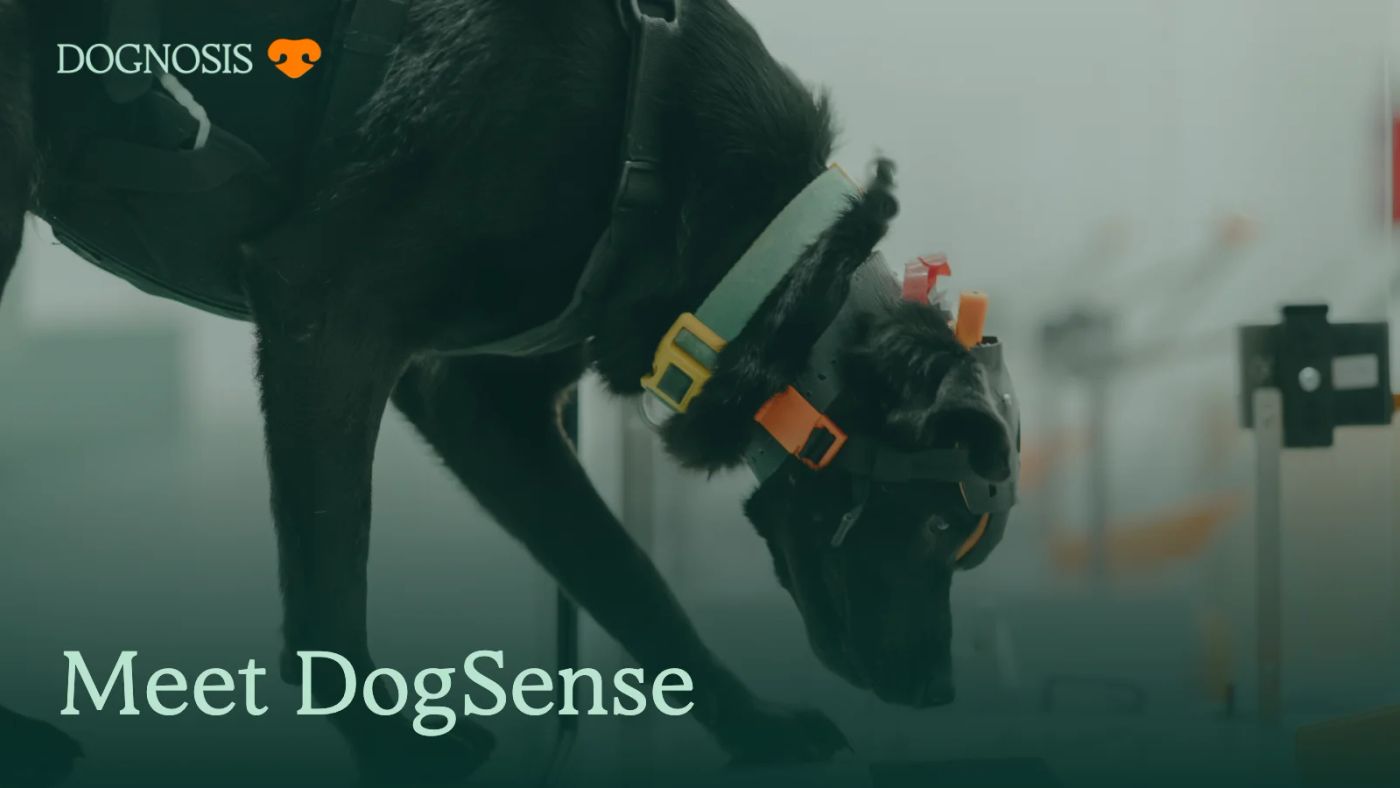
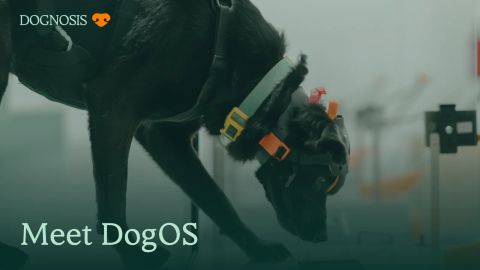
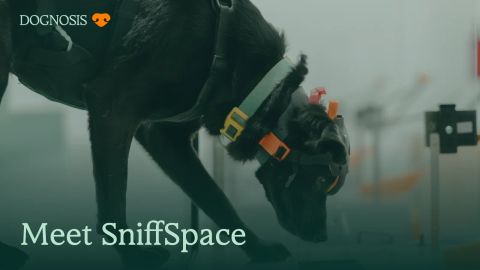
Every DogSense helmet starts with a scan of one dog's head. The helmet is sculpted from it, so it fits her and nobody else: snug enough to pick up signals from her brain, loose enough that she can move the way she does when she sniffs. It's the part of CancerWatch by Dognosis people find hardest to picture, so here's what it does, and what it can't.
What Is DogSense?
DogSense is a patented wearable brain-computer interface for dogs. While a dog sniffs a sample, it records her brain activity, heart rate, breathing and movement, none of it invasive, which adds what a camera can't see and helps us train the dogs and understand their responses in more depth. Our team described the approach, and how we plan to validate it, in a 2026 perspective in the Journal of Breath Research (Dakhave et al., 2026).
Why Record a Dog's Brain?
Dogs respond to the chemicals in human breath and body samples in ways that line up with disease, and across many studies, some of them blinded, they've picked out cancer samples from controls (Bauër et al., Integrative Cancer Therapies, 2022). They carry far more olfactory receptors than people, with a larger share of the brain given over to smell (Kokocińska-Kusiak et al., Animals, 2021), and trained dogs can pick out some odours at one part per trillion (Angle et al., Frontiers in Veterinary Science, 2016).
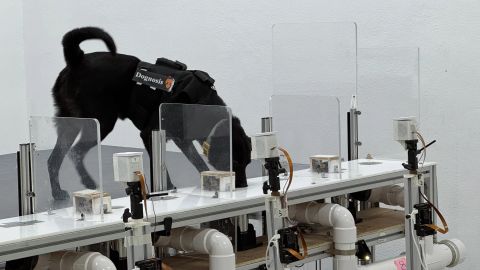
With the detecting well established, what's been missing is a standard record of what the dog is doing. Traditionally the signal is her behaviour, a sit, a pause or a nose-touch, read by a handler, and studies differ in how they're set up, what samples they use and how the dogs are trained, so a dog's accuracy can shift with her conditioning and motivation, which is why researchers keep asking for standardisation (Jezierski et al., Journal of Breath Research, 2015). DogSense adds a second, time-stamped record alongside her behaviour, so an unclear moment can be checked against what was happening in her nervous system.
Fitting the Helmet
Fit decides the quality of the data as well as the comfort of the dog. A dog who's uncomfortable sniffs differently, and the recording changes with her, so each helmet is made for one dog, with the electrodes placed to record through her coat, and we keep adjusting the fit as we learn what each dog tolerates.
What DogSense Can't Do
DogSense can't tell us which chemicals a dog is responding to. The Breath VOC score comes from DogOS, which combines the responses of the three or more dogs that sniff each sample, and what DogSense records helps us make sense of those responses.
The detecting itself belongs to the dogs. Rose and Whiskey, two of the dogs who wear DogSense in our research, were detecting long before anyone fitted them with electrodes, like every detection dog trained to this standard. They don't need the helmet to know what they're smelling, and the helmet is there so the rest of us can know too.
If you'd like to be among the first to try CancerWatch, join the waitlist.
CancerWatch is not a diagnostic test. It does not diagnose, predict, prevent, cure, treat, mitigate, or monitor cancer or any other disease or disorder.