What a Cancer-Sniffing Dog Smells
Dogs kept the olfactory machinery humans mostly lost. Here's the biology behind that gap, and what twenty years of research has learned about reading it.

The Biological Reason a Dog Can Detect What We Cannot
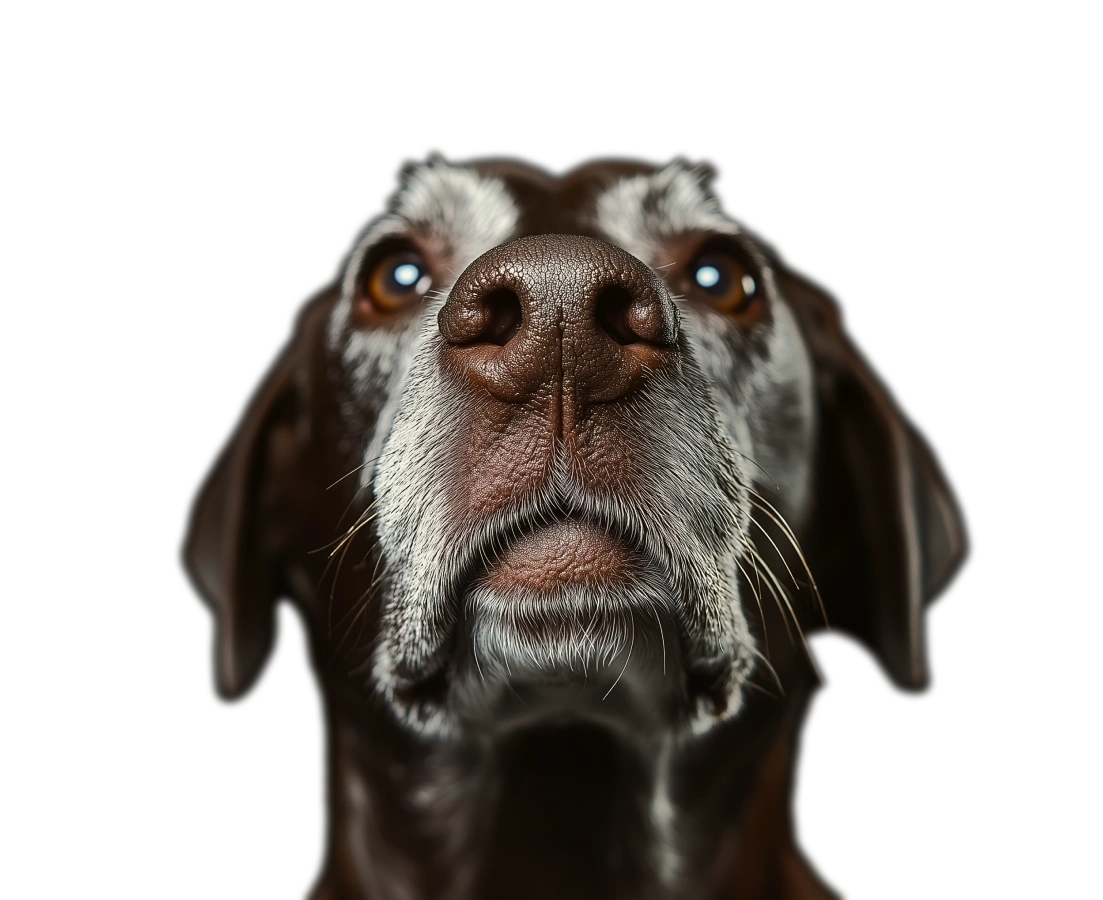
Humans carry an estimated 900 olfactory receptor genes. A dog's genome contains roughly 1,300, and of the canine sequences that have been characterised, only 18% are predicted to be pseudogenes (genetic sequences that no longer function), compared with 63% in humans (Quignon et al., Genome Biology, 2003). Working through what that means functionally: roughly 1,066 of a dog's olfactory receptor genes are estimated to be active, against roughly 333 of ours, something like three times the functional capacity, on top of a nose that was already larger to begin with.
That gap in working machinery, not just gene count, is the real story. One leading hypothesis for why traces back to vision: as primates evolved full colour vision, their olfactory receptor genes appear to have degraded into pseudogenes at a higher rate, as though sight took over some of the work smell used to do (Gilad et al., PLOS Biology, 2004). The hypothesis is genuinely contested. Later work comparing a broader range of primate species found no clean link between colour vision and olfactory decline, so the timing and cause of humans' olfactory loss is still an open question (Matsui, Go & Niimura, Molecular Biology and Evolution, 2010). What isn't in dispute is the outcome. Dogs kept the machinery that primates, humans included, mostly lost.
The Smell of Cancer
Understanding what the dog detects requires understanding what cancer produces. Tumour cells alter the body's chemistry in measurable ways that eventually reach exhaled breath, releasing volatile organic compounds, or VOCs, metabolic byproducts that reflect differences between tumour and normal cell activity.
The mechanisms are still being worked out, but researchers link these VOC changes to oxidative stress, cytochrome P450 activity (enzymes that break down chemicals in the body and can generate byproducts of their own in the process), and the metabolic disruptions and mutations that come with cancer itself (Zhao et al., Frontiers in Oncology, 2025). One well-documented pathway: oxidative stress drives lipid peroxidation, the breakdown of fatty acids by reactive molecules, which produces methylated alkanes, simple carbon compounds, as a byproduct, a chain of biological events that ends as something a trained nose can register (Zhao et al., Frontiers in Oncology, 2025). The breath sample, in that light, is less a proxy for the tumour and more a direct metabolic readout of the body's altered state.
Can Dogs Really Detect Cancer From Breath? What the Studies Show
The canine detection literature stretches back more than two decades, to a 1989 case report of a dog that wouldn't stop sniffing a mole on its owner's leg, which turned out to be an early melanoma (our full history of the field is here, for anyone who wants the longer story). An early double-blinded study found that among lung cancer patients and controls, canine scent detection reached 0.99 sensitivity and 0.99 specificity, with sensitivity for breast cancer at 0.88 and specificity at 0.98 (McCulloch et al., Integrative Cancer Therapies, 2006).
More recent work has explored which biological substrate dogs detect most reliably. A 2025 study found dogs correctly identified lung cancer-positive breath samples with a mean accuracy of 0.78, compared with only 0.42 for saliva samples, confirming breath as the considerably richer signal (Crawford et al., ERJ Open Research, 2025). That's part of why breath is the medium BreathEasy is built around: it carries a stronger signal than the alternatives, and collecting it asks nothing invasive of the person being screened.
The science has grown more precise about what it can claim, and more honest about what it can't yet explain. Researchers have not conclusively determined the specific VOCs that let dogs detect cancer from breath, and that gap between demonstrated capability and complete molecular explanation isn't a flaw in the research, it's simply where the field stands.
How Dognosis Turns a Dog's Alert Into a Screening Test
The challenge canine detection has always faced is scale. Individual dog performance varies, training protocols differ between studies, and there's a practical limit to how many animals a detection programme can sustain. The question Dognosis set out to answer was whether a structured system could produce results consistent enough to be clinically meaningful.
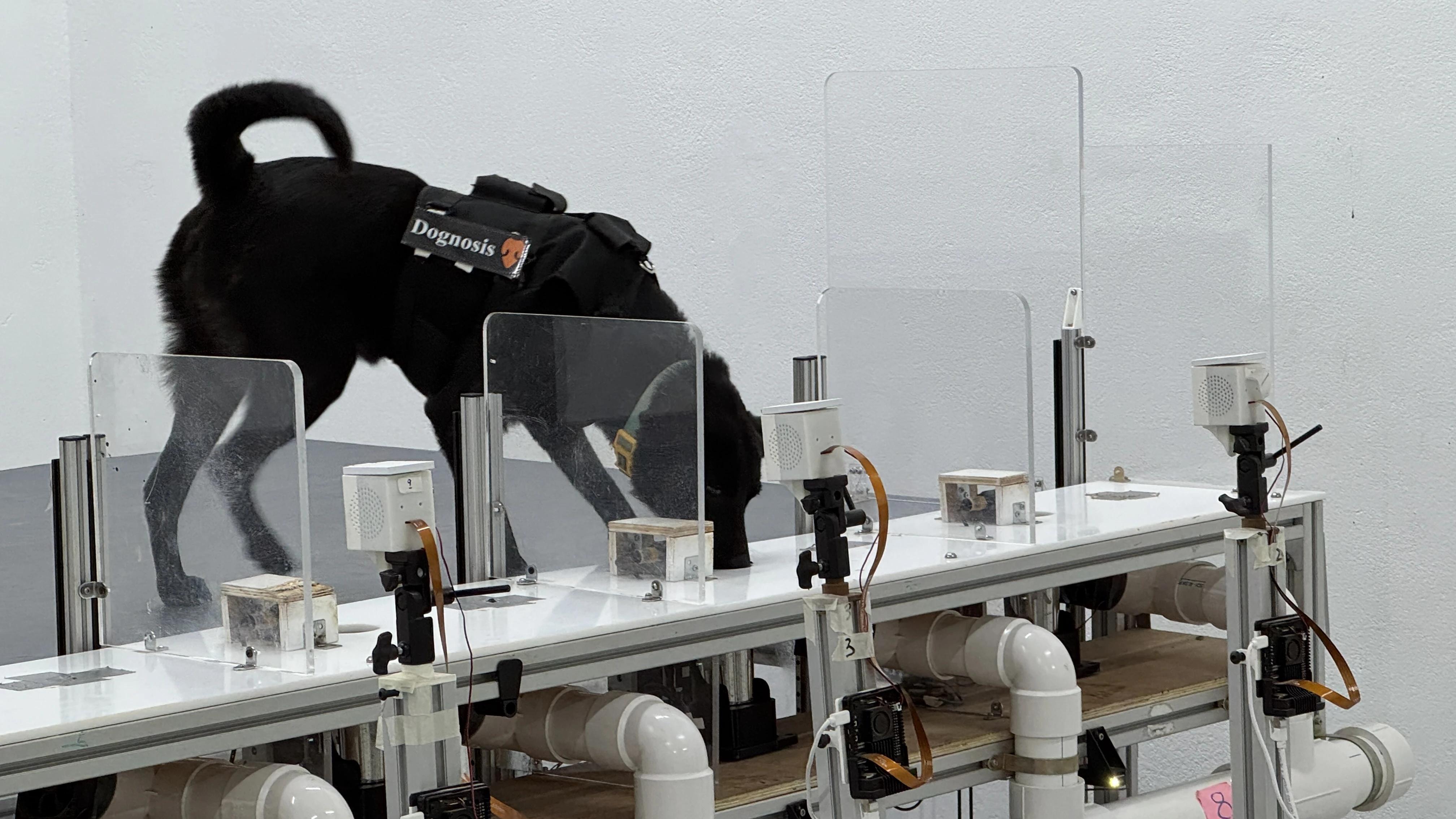
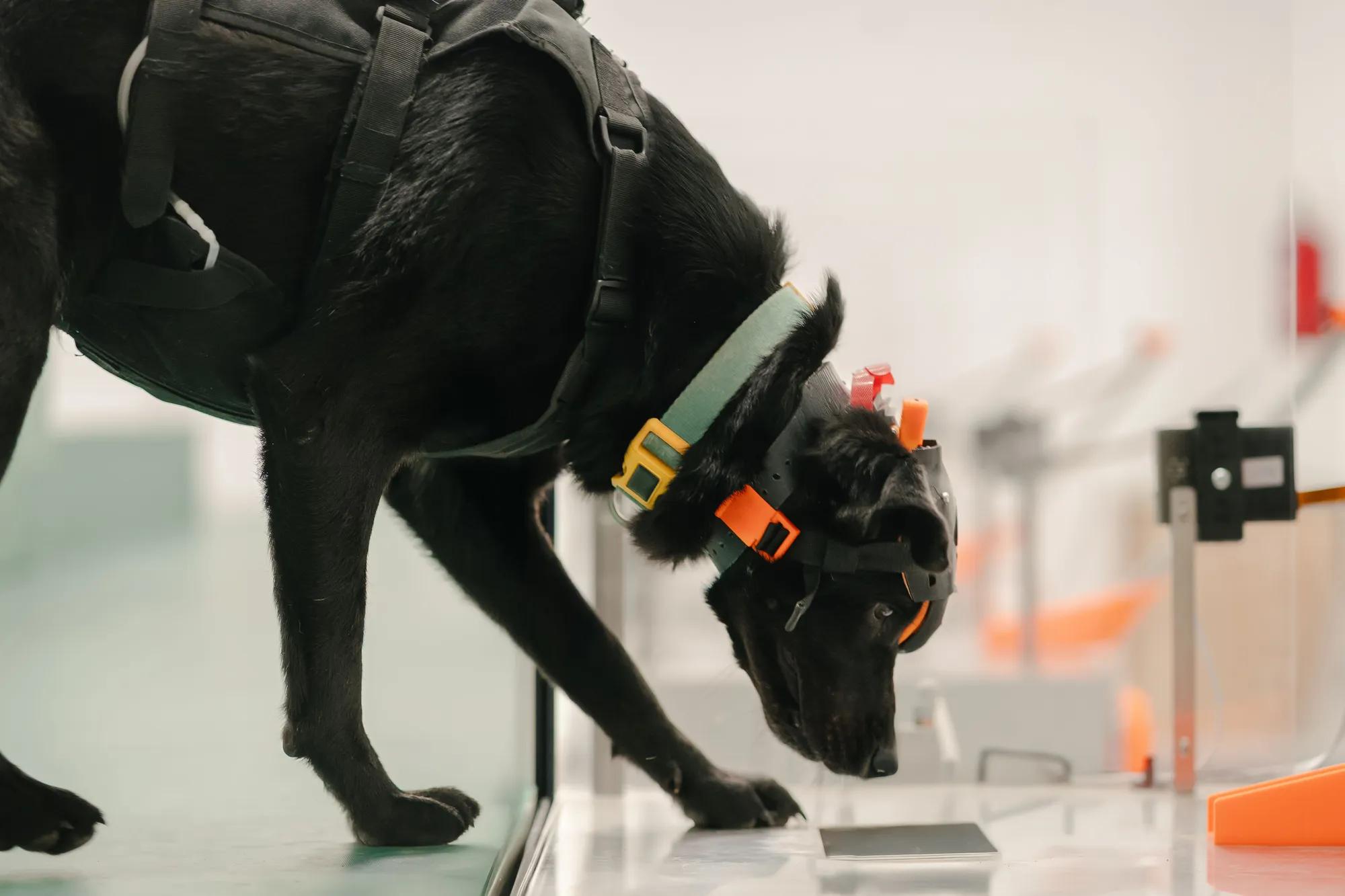
That system has three parts. DogSense is a lightweight, individually fitted headset that reads a dog's neural response to a sample directly, rather than waiting for a trained behavioural cue like a sit or a bark. The distinction matters, because a behavioural alert can be delayed, inconsistent, or shaped by what a dog has learned a handler wants to see, while a neural signal is harder to fake and easier to standardise. SniffSpace is the physical environment those sessions run in, a standardised, multi-port workstation built so that sample handling, presentation, and timing stay consistent across dogs and sessions, removing a source of variability that has made canine detection studies difficult to compare with one another in the past. DogOS is the software layer underneath both, the system that takes each dog's neural signal, weighs it against that dog's own historical accuracy, and folds the result into a single probability estimate rather than treating any one dog's response as a final answer.
Across six hospitals in Karnataka, our study enrolled 3,275 participants overall, with a test cohort of 283 treatment-naive, biopsy-confirmed cancer patients spanning seven major cancer groups, and 1,219 controls, each providing a breath sample collected on a surgical mask worn for ten minutes. It compared people already known to have cancer against people known not to, with the dogs evaluated blind, meaning whoever recorded each result had no way of knowing which sample was which (Kulgod et al., Journal of Clinical Oncology, 2026). DogOS integrated individual dog indications through a Bayesian fusion framework built on exactly this principle, weighting each dog's response against its own track record before combining results across the group.
Sensitivity for early-stage disease (Stage I to II) came in at 90.6%, consistent across major cancer types, with overall specificity at 91.3% and an AUC of 0.962 across the full study (same source). That consistency across stage matters because five-year survival drops substantially at each successive stage of diagnosis (Muller, Walters, Coleman & Woods, Cancer Epidemiology, 2018), which is exactly why a detection system that holds its accuracy at the earliest stages carries real clinical weight.
How Does BreathEasy Work?
BreathEasy is a breath-biomarker test. Its underlying detection science draws directly on canine olfaction research: decades of published literature establishing that tumour metabolism produces a distinct VOC signature, and more recent work showing that structured multi-dog systems with probabilistic integration can read that signature reliably across cancer types and stages. The dogs aren't a curiosity or a metaphor here, they're the detection instrument.
The collection method is straightforward. A person breathes normally into a surgical mask, the same one used in the study above and the BreathEasy kit itself, for ten minutes. A technician seals and stores it, and trained detection dogs at a central laboratory evaluate it afterward. This isn't a test you get results from on the spot, results take fourteen business days, and a physician reviews the findings with the patient, so the science informs the conversation between doctor and patient rather than replacing it. For more on what happens to that breath sample chemically before a dog ever encounters it, read our explainer on the science behind it.
The signal has been in the breath all along. What the last twenty years of research has been answering, slowly and carefully, is how to read it.
If you want to be among the first to access BreathEasy when it launches, you can join the waitlist. A two-minute form is all it takes to hold your place.