What It Took to Make a Dog's Nose Into Medicine
The study behind our JCO paper: how it was run, what the numbers show, and what comes next.


The Dogs Found It First, They Always Do
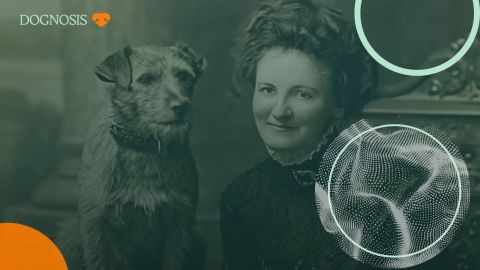
Thirty-six years ago, a woman went to her doctor because her dog wouldn't leave a lesion on her leg alone, sniffing at it insistently for months until she finally had it checked. It was a malignant melanoma, caught at a thin, curable stage. The case made it into The Lancet, one of the world's most respected medical journals. Medicine noticed, cited it occasionally, and largely moved on.
Fifteen years later, a UK team published the first peer-reviewed study showing dogs could detect cancer from a biological sample with statistically significant accuracy. Over the two decades since, similar studies followed across cancer types and sample types, breath, urine, blood, tissue, many reporting sensitivities and specificities above 90%. The evidence kept mounting, beyond cancer too, to Parkinson's, diabetes, COVID: disease after disease, leaving a chemical trace a dog can find.
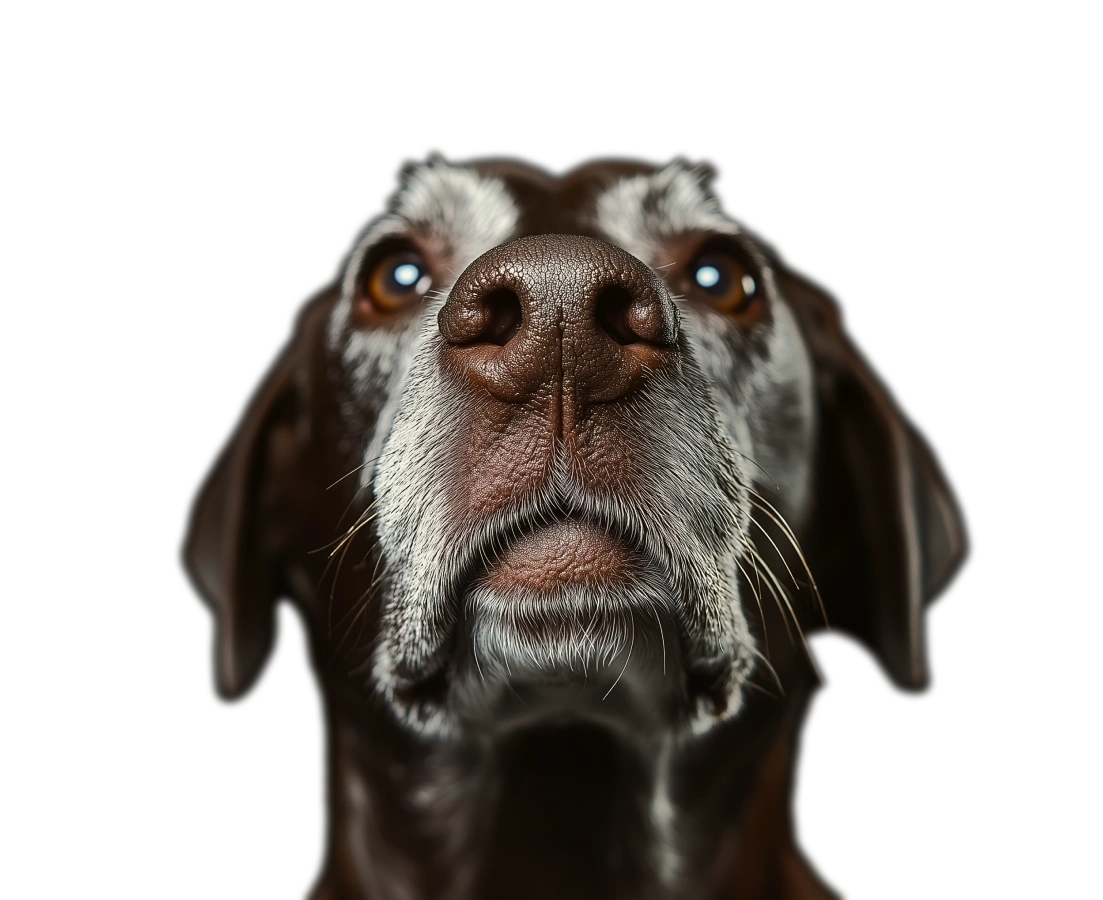
So why did this never become something medicine could use? It starts with what the dogs are actually detecting: volatile organic compounds, the metabolic byproducts whose profile shifts when cancer disrupts normal cellular metabolism. Human breath alone carries over 1,400 distinct VOCs, and a dog's nose can pick out patterns within that complexity at parts per trillion, a sensitivity our best lab instruments, working at parts per million, have never come close to matching.
But a nose, however extraordinary, cannot scale on its own. That takes a way to read what the dog is detecting, standardised and reproducible enough to screen populations rather than dozens, and rigorous enough for medicine to trust. So we built the technology to decode what the dogs find, with their nose at the centre of it. The results were published in the Journal of Clinical Oncology in April 2026.
The Study and the Numbers
We enrolled 3,275 participants across six hospitals in Karnataka, three in Hubballi and three in Bengaluru. Some had biopsy-confirmed cancer across seven cancer types, recruited before treatment began. Others were healthy or living with non-cancerous conditions, recruited from the same clinical settings, so the dogs were responding to the scent of cancer, not the scent of a hospital.
Each participant did one simple thing: breathed normally into a surgical mask for ten minutes. The mask was sealed, logged, and sent to our lab, where seven of our dogs, Chloe, Cheetah, Iggy, Billy, Whiskey, Jessie, and Banu, took over.
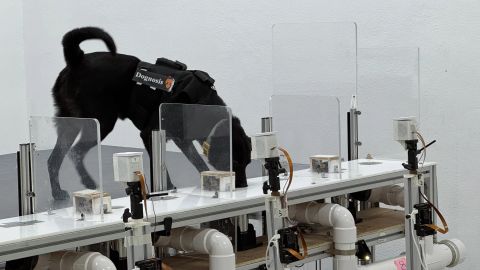
Each session runs on SniffSpace, our eight-port platform: samples presented in randomised arrays, barrier gates controlling access timing, QR scanners logging every sample, infrared sensors timestamping every sniff. Each dog gives a simple read, alert or pass, and at least three dogs independently assessed every sample. Those reads were combined through a Bayesian fusion model that weighted each dog's own historical sensitivity and specificity, and factored in each participant's risk profile, arriving at a single calibrated score.
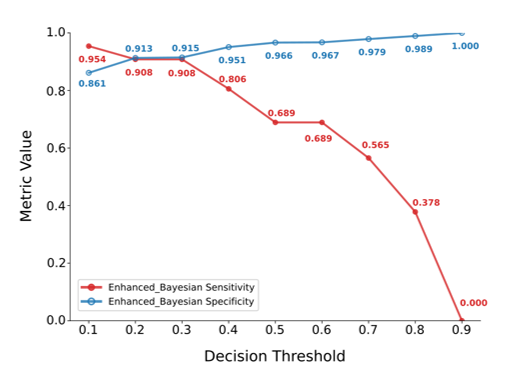
Tested on 1,502 participants the dogs had never encountered before: sensitivity 90.8%, specificity 91.3%, AUC 0.962.
Consistent, Across the Board
Performance held across all seven cancer types, head and neck, breast, upper and lower GI, gynecologic, lung, and genitourinary, and across disease stages: sensitivity for Stage 1 and 2 was 90.6%, nearly identical to late-stage performance. That matters, since how early a cancer is caught shapes almost everything about what happens after.
We tested the system across the variables that matter when screening millions, not hundreds. We simulated a dog having an off day, removing one from the ensemble entirely, and the system held, no result depended on any single dog. Performance didn't shift meaningfully by sex, tobacco history, or common conditions like diabetes and hypertension, or by whether someone had eaten recently or came in morning versus afternoon.
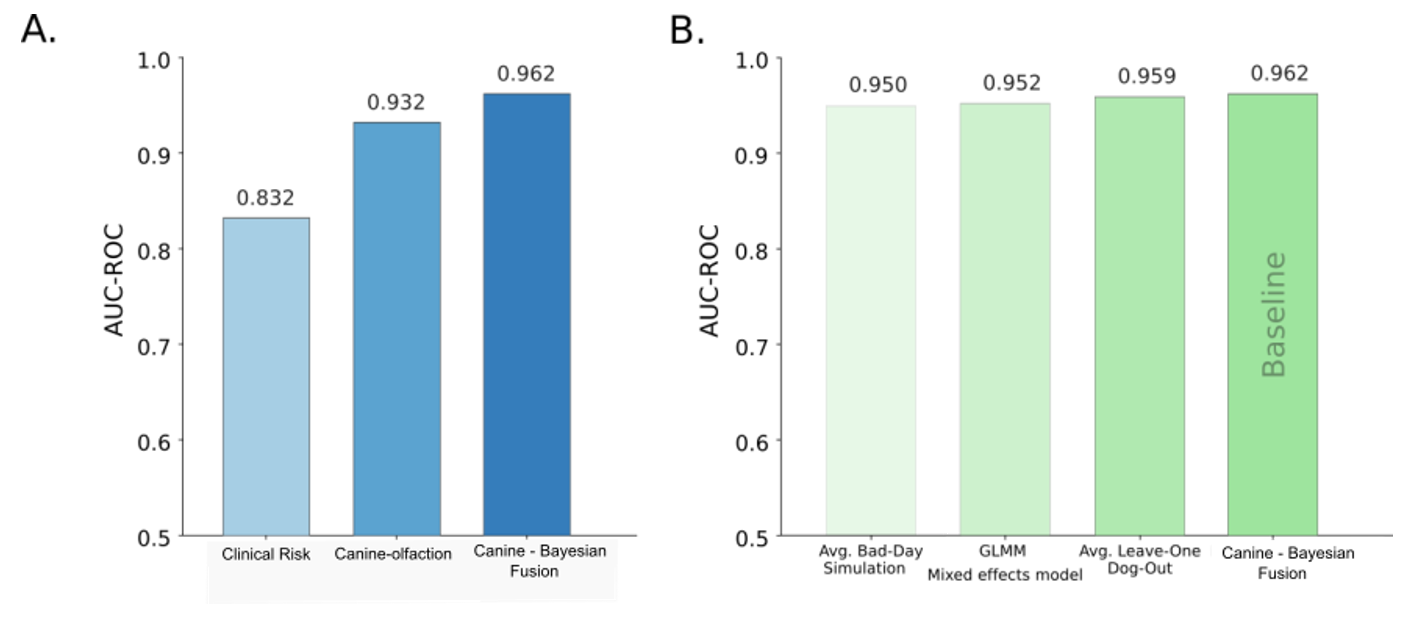
Worth understanding what actually drives the accuracy: a model built on clinical risk factors alone reached an AUC of 0.832. The dogs alone reached 0.932. Combined through the Bayesian fusion model, the system reached 0.962, a result neither the dogs nor the clinical data could reach alone.
Teaching Machines to Listen
The Bayesian model decodes what the dogs find. What comes next is reading the dogs themselves more precisely than any human trainer could. In this study, computer vision captured sniffing behaviour at each port, how long a dog lingered, the path of their approach, the rhythm of each sniff, feeding those signals into the model alongside each dog's binary read. Facial cameras picked up subtler signals still: ear position, eyelid movement, the shift in expression when something catches a dog's attention.
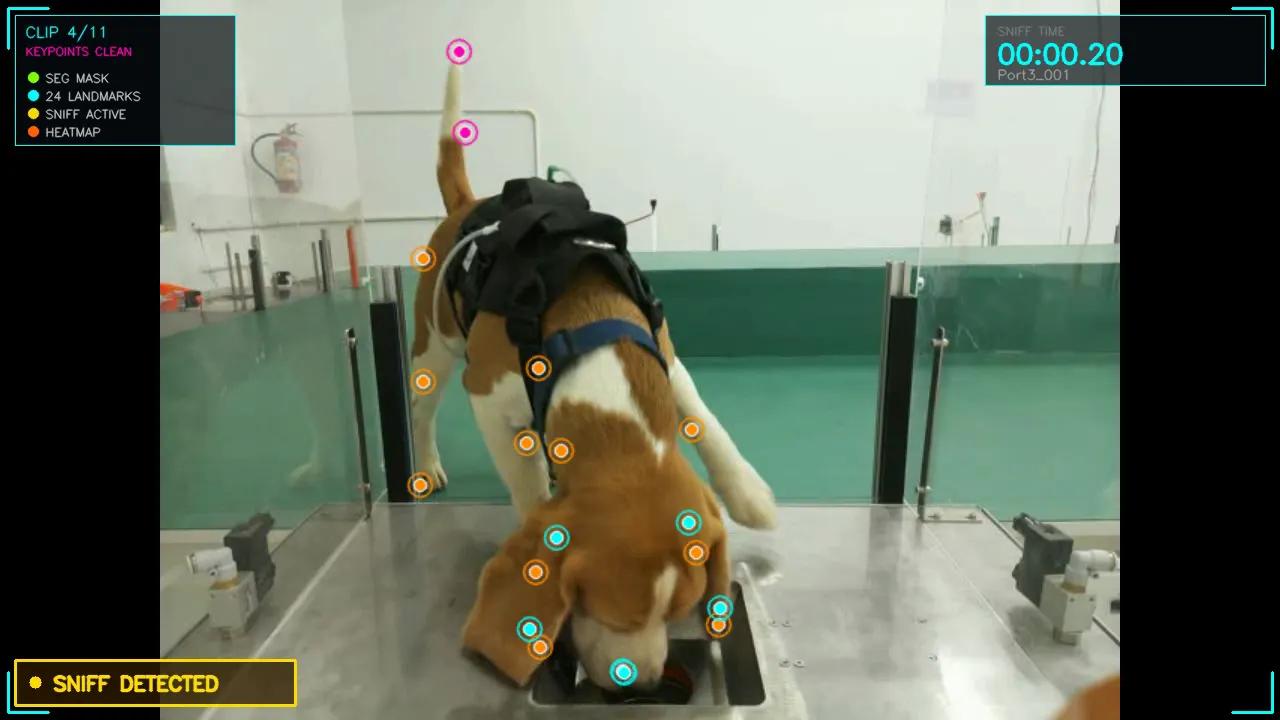
In a pilot subset of 425 participants, this vision-augmented model reached an AUC of 0.938, the first time automated behavioural sensing had been folded into the fusion framework at all. It suggests automated sensing could eventually take the human observer out of the loop entirely, which is exactly what we're building toward.
SniffSpace itself is being upgraded too, moving from manual sample handling to a fully automated system where a robotic arm opens, presents, seals, and cleans each port between samples. Throughput jumps from eight samples a session to over 200, with swappable tray sets in rotation and RFID tags tracking every sample slot in real time.
DogSense, our patented brain-computer interface, is the next layer. Each helmet is individually sculpted to the dog's head, snug enough to capture neurophysiological signals without interfering with natural movement. What it reads, brain activity, respiration, heart rate, is interpreted by DogOS, our suite of machine learning models. The goal is to make canine olfaction fully legible: not just whether a dog alerts, but what the alert means, how certain the dog is, and what's happening in their brain when they find it.
Verdict From the Field
The Journal of Clinical Oncology is where oncologists go to update how they treat. Dr. Jonathan Friedberg, the journal's Editor-in-Chief, wrote that the results "pave the way for larger validation studies" of canine olfaction as a screening modality, particularly for populations with limited healthcare resources.
The study was also selected for a commissioned editorial, where independent reviewers offer their own verdict. Dr. Shiran Shapira and Prof. Nadir Arber called it an effort to move canine detection "beyond anecdotal observations toward a more structured analytical framework," concluding that the pattern's reproducibility across labs suggests a real biological signal is at work.
Akash and Dr. Sanjeev Kulgod, Chief Surgical Oncologist at RadOn Cancer Centre, joined the JCO's monthly podcast to discuss the work with host Dr. Davide Soldato, a strong reception from the world's leading cancer journal for a study about dogs sniffing cancer.
The Next Phase
This study establishes analytical validity: proof the system can accurately tell cancer from non-cancer under controlled conditions. What it doesn't yet establish is clinical utility, whether deploying it in a real screening population, people with no symptoms and no prior cancer history, produces the outcomes we believe it can. It's also worth being clear about where a test like this sits relative to imaging, since the two aren't competing, they're staged.
That's what our FirstAlert study tests next: higher-risk but otherwise healthy people, and people who've completed cancer treatment, to see whether the dogs can flag a returning cancer before it shows up clinically. A larger community screening study follows after that, together, the path from a validated study to something that works at the scale of the population that needs it.
We're enrolling for our trials now. Every person who joins helps the dogs get better, the model get sharper, and the case for early detection get stronger. Breathe Easy is launching in Bengaluruin early 2027. If you want to be first in line when it reaches your city, join the waitlist.