How BreathEasy Uses Canine Brain-Computer Interfaces to Detect Cancer
For research directors evaluating novel detection modalities: how canine BCI technology compares to liquid biopsy and electronic nose platforms, and where the real gap sits.

The Biology Behind Canine Scent Detection
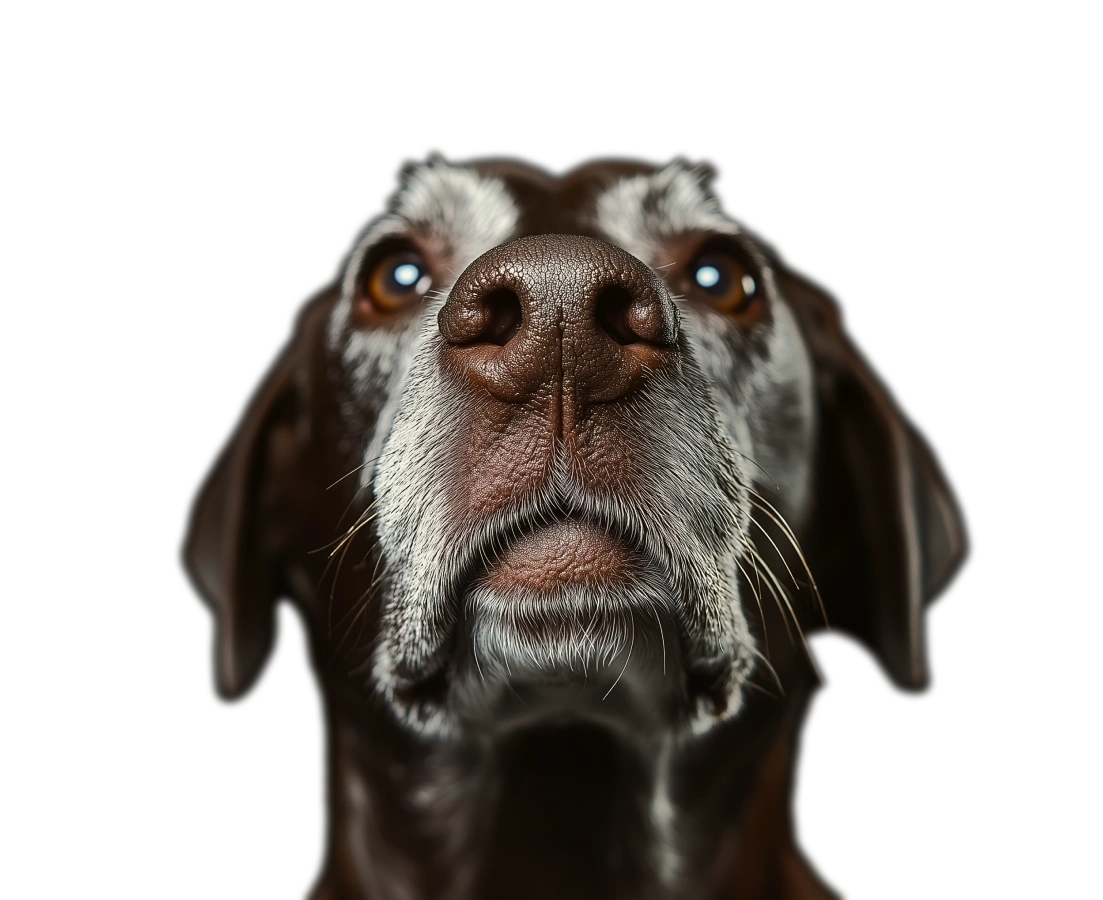
Dogs have between 125 and 300 million olfactory receptors, compared to roughly 5 to 6 million in humans, and their olfactory cortex occupies a proportionally larger share of brain volume (Kokocińska-Kusiak et al., Animals, 2021; Barlowska et al., Animals, 2026). This isn't just curiosity, it's a precision instrument refined over thousands of years of selective breeding and, more recently, deliberate training.
Trained detection dogs can identify volatile organic compounds associated with tumour metabolism at concentrations as low as one part per trillion (Angle et al., Frontiers in Veterinary Science, 2016), a level of sensitivity we go into in more depth in our piece on the science of VOCs. Peer-reviewed studies have documented their ability to detect lung and breast cancer from breath (McCulloch et al., Integrative Cancer Therapies, 2006), and prostate cancer from urine (Taverna et al., Journal of Urology, 2015). The sensitivity at early stages, when circulating tumour DNA shedding is minimal and imaging is often inconclusive, is where canine detection has consistently impressed researchers.
The scientific challenge has never been whether dogs can detect cancer. It has been whether that detection can be digitised, standardised, and made reproducible enough to function as a research or clinical tool.
What a Canine BCI Actually Does
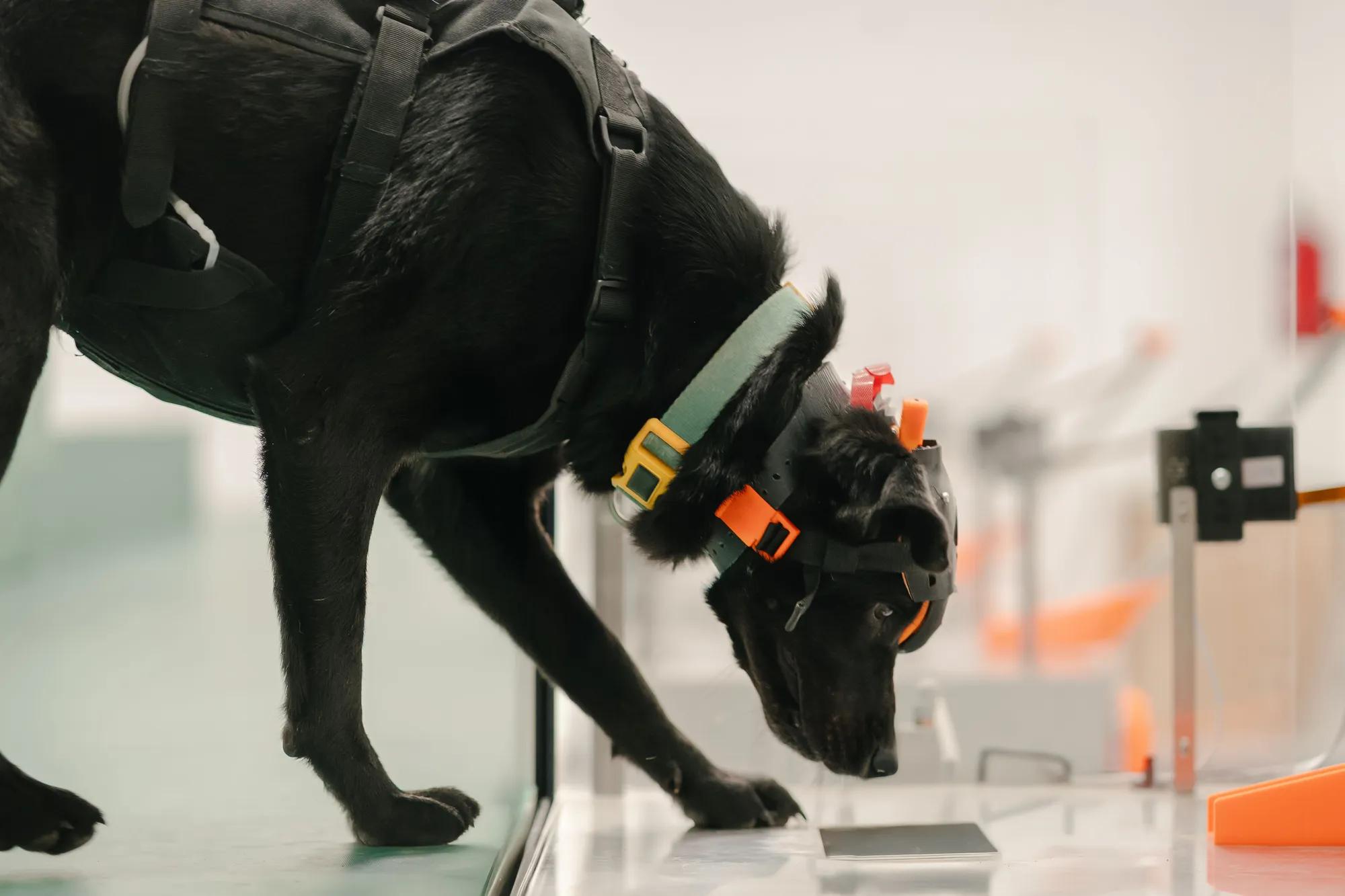
Dognosis approaches this problem at the level of the dog's nervous system. Our patented device, DogSense, is a custom-fitted, non-invasive EEG headset designed for trained detection dogs. When a dog smells a biological sample, DogSense captures the neural signals generated in real time, not the dog's behavioural response, a sit, an alert, a paw tap, the product of months of training in its own right, but the electrophysiological activity in the brain that precedes and accompanies olfactory recognition.
That distinction matters. Behavioural cue-based detection programmes are subject to handler influence, fatigue, and individual variation between dogs. Neural signal capture bypasses those confounds: the dog's brain responds to the scent, the EEG records that response, and the data goes directly into the processing pipeline.
That pipeline is DogOS, an integrated software platform running multimodal machine learning models trained on real neural and VOC data. DogOS processes the EEG output, applies signal processing to extract meaningful features, and produces a real-time digital prediction about whether a disease-related scent signature is present in the sample. In BreathEasy, that prediction becomes the VOC score a clinician reviews before it reaches the person being screened.
The SniffSpace Environment
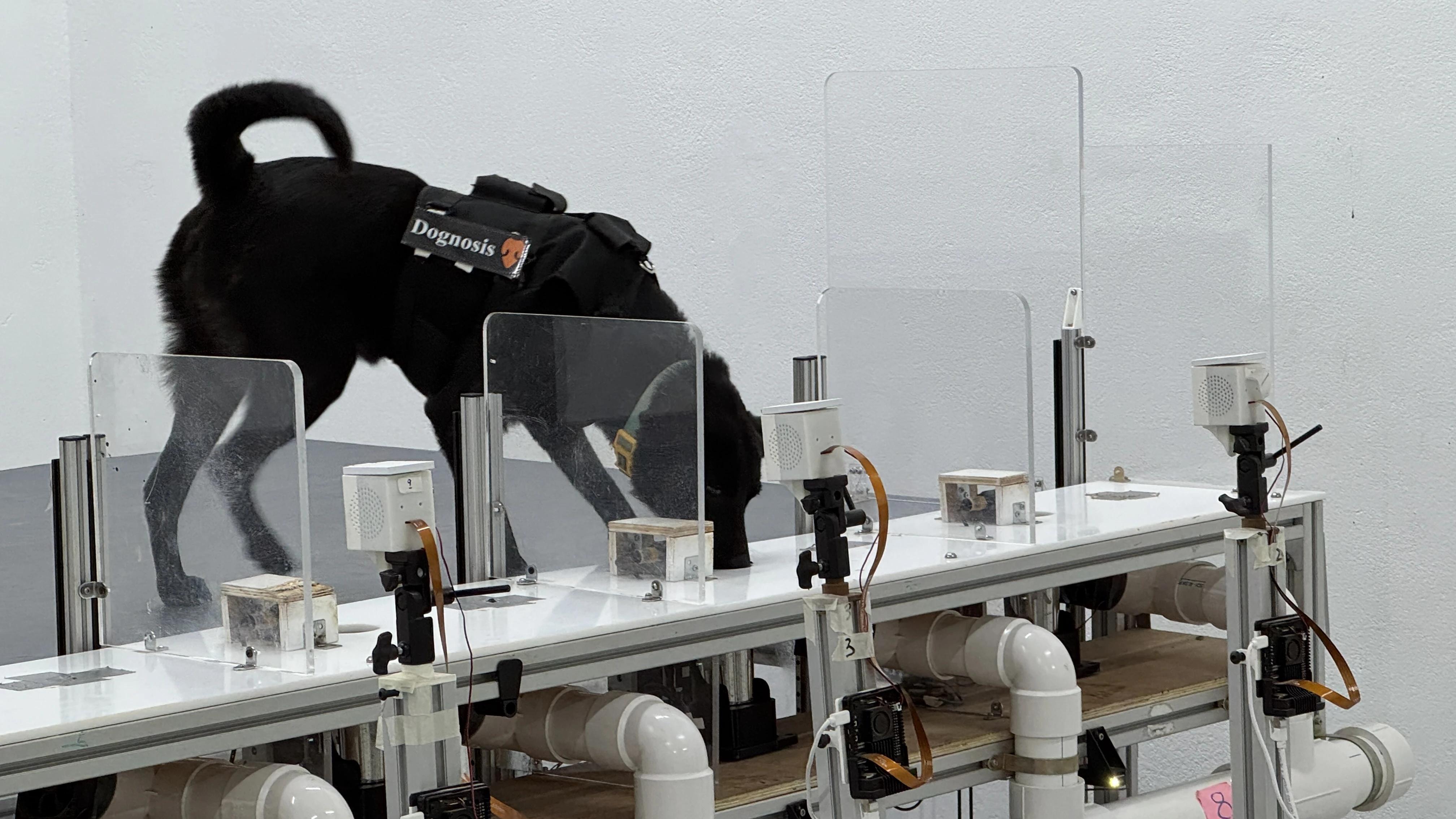
Reproducibility in detection research depends heavily on controlled conditions. Dognosis addresses this with SniffSpace, an automated olfactory workstation that standardises how samples are presented across dogs and sessions. This matters for two reasons: it eliminates a major source of variability in canine detection studies, inconsistent sample handling and presentation, and it creates a controlled session structure that generates data suitable for publication and regulatory review.
The combination of DogSense, DogOS, and SniffSpace is designed to produce detection sessions that are replicable across dogs, sites, and time points, the infrastructure gap that has prevented canine cancer detection research from moving from compelling pilot studies into scalable clinical programmes.
How This Compares to Current Early Detection Approaches
Liquid biopsy. Blood-based multi-cancer early detection tests have attracted significant investment and clinical validation. GRAIL's Galleri test showed in its PATHFINDER 2 study, 35,878 participants, that 71% of newly detected cancers were caught at Stages I through III (GRAIL, press release, May 2026). The fundamental constraint is biological: circulating tumour DNA is shed in proportion to tumour burden, and early-stage tumours shed very little of it, which is why false-negative rates at Stage I remain a recognised limitation. Canine olfactory detection operates on a different signal entirely, volatile metabolic byproducts that tumours produce even at very early stages, before DNA shedding becomes detectable.
Electronic nose devices. VOC-based electronic nose platforms are the closest technological analogue to what Dognosis does. Owlstone Medical's Breath Biopsy platform uses a breath collection device built on FAIMS microchip technology to analyse VOC biomarkers. It serves pharmaceutical R&D and academic clinical trials rather than functioning as a clinical screening product itself, and its workflow requires lab processing time rather than producing real-time results.
Traditional canine detection programs. Organisations using trained detection dogs without a BCI layer face a scalability ceiling: individual dog performance varies, handler influence is difficult to eliminate, and session data doesn't integrate easily into clinical or research information systems, a history worth understanding in its own right, but not the standardised, auditable data streams that hospital research departments or regulatory bodies require.
Why This Matters for Oncology Research Programs
For research directors evaluating novel detection tools, the practical questions are usually the same: can this generate publishable data, integrate with existing sample workflows, and does it have a regulatory pathway and clinical partnership evidence behind it? BreathEasy's Phase 2 trial results achieved 90.8% sensitivity, 91.3% specificity, and an AUC of 0.962 (Kulgod et al., Journal of Clinical Oncology, 2026), establishing a peer-reviewed evidence base for institutional evaluation. You can read more on what went into that study.
Mapped honestly, a specific gap becomes visible: real-time, multi-cancer, on-site detection that requires no blood draw and no lab processing delay. Galleri requires venipuncture. Owlstone's platform requires breath collection hardware and a lab analysis pipeline. Traditional canine programmes are non-scalable and produce no digital output.
Canine brain-computer interface technology doesn't replace liquid biopsy or imaging, it addresses a different part of the detection problem, at an earlier signal, using biological sensitivity engineered systems haven't yet replicated. DogSense is what makes that signal legible. BreathEasy is what makes it usable.
BreathEasy is launching in Bengaluru in early 2027. If you want to be first in line when it reaches your city, join the waitlist.