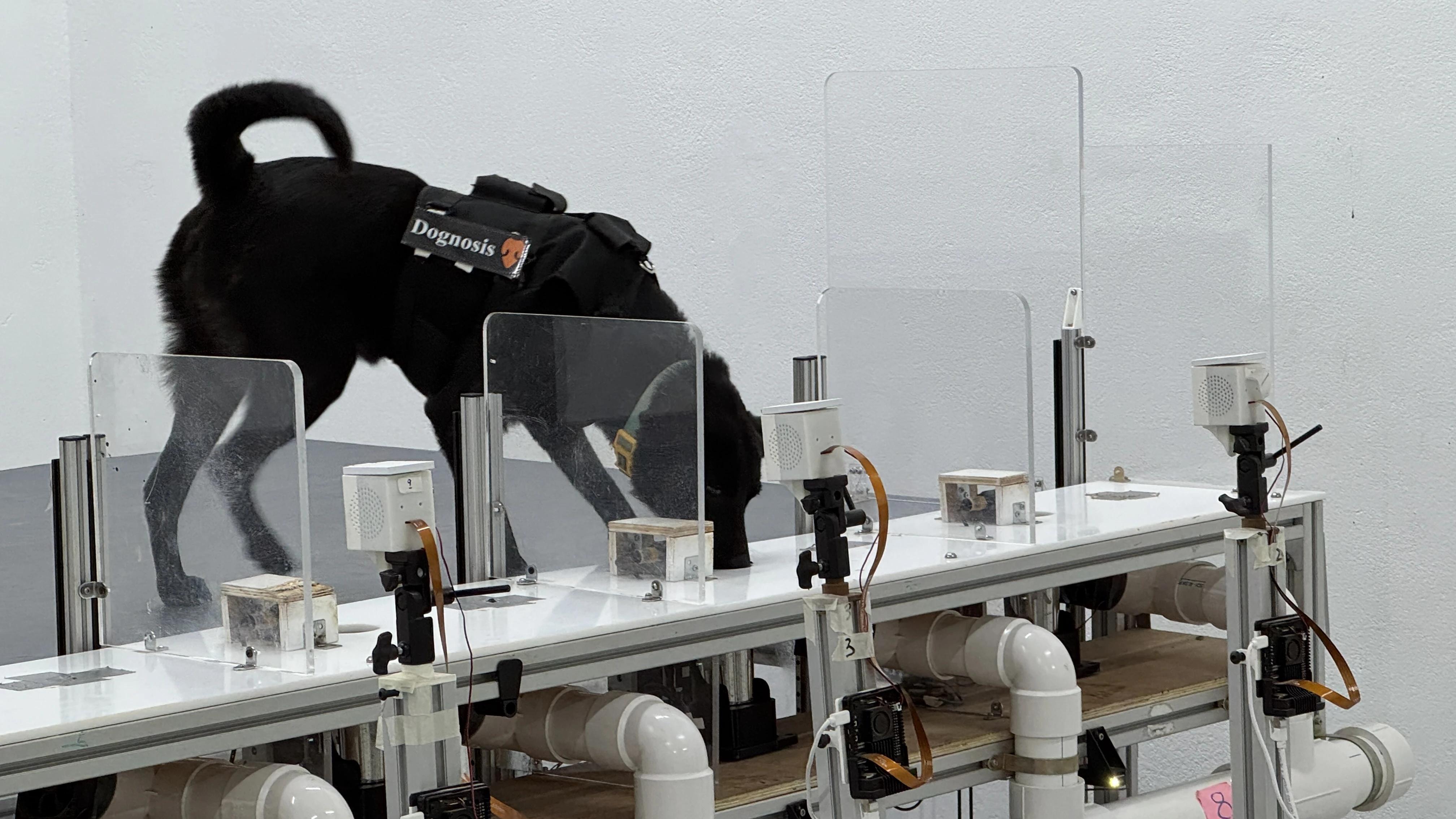
Dognosis Origin Story
Two founders, two very different paths, one shared conviction: that dogs could do something for medicine that nothing else could. Here's how Dognosis began.

"As man lifts his eyes to the stars and meets the other inhabitants of this planet, his horizons become widened, his science deeper, his philosophy more in tune with the universe as it exists."
— John Lilly, Communication Between Man and Dolphin
Akash draws his commitment to improving healthcare back to his grandfather Yallapa Kulgod, who started one of the first hospitals in the Taluka of Ramdurg in Belagavi District, North Karnataka. Growing up in a family of doctors in the 99th most populous city in India, Akash saw first-hand how impactful the practice of medicine can be, after all, what is more radical than the transformation of sickness to health? Yet he saw how doctors were inherently constrained by the technology they had access to, and the limited time in a day. No matter how hard his grandfather, parents, uncles and aunts worked, 24 hours was not sufficient to attend to the immense sickness in a country of 1.4B people. Thus began his search for deep leverage points, places in a complex system where interventions can be difficult but have great potential to bring about transformative change.
Itamar saw up-front how dogs are capable of feats of cognition that cannot be replicated or matched by humans, even with the best technology of the 21st century. During his time as a soldier and commander of the Israeli Defence Forces Special Ops K9 Unit, the legendary Oketz, Itamar worked alongside some of the most elite dogs on the planet, performing explosive detection and other complex special operations with life-and-death stakes. While he held immense gratitude for the opportunity to work with dogs at the highest level, Itamar did not expect to continue working with dogs after his service, harbouring an impulse toward something with greater potential for scalable impact. Yet as fate would have it, he ended up on a path that remained entwined with canines.
Akash's Path to Dognosis
Akash studied at the University of California, Berkeley, where he took 28 classes across 14 departments, performed research in 5 different research labs, and was involved with multiple student organizations. The common thread uniting his explorations was a fascination for the ability of cutting-edge science and technology to shine a light into the complexities of the mind, leading him to major in Cognitive Science, with a focus on Computational Neuroscience. He carried that intellectual substrate back with him on a gap semester in Belagavi during the second wave of the Covid pandemic.
As he observed his father managing a Covid hospital, with all the terrible trade-offs that entailed, Akash, along with people around the world, woke up to the fact that dogs could detect Covid-19, even in asymptomatic people, with extraordinarily high accuracies, often surpassing the gold standard of RT-PCR. And yet, despite their performance, dogs were not being deployed en masse to work alongside humans to fight the virus. Akash could not help but get obsessed with the question of why, where were the Covid-sniffing dogs in Belagavi? The quest to find an answer soon came to have a name.
Itamar's Path to Dognosis
Itamar was one of roughly 60 groups worldwide participating in a landmark moment in biomedical detection dogs, the first time humans and dogs worked together across continents to detect and monitor disease in real-world settings. As the first employee of the startup Prognose, he was initially recruited to help the Indian Army train dogs to stop the spread of Covid amongst soldiers at barracks in the North. But soon he began working on diseases that had plagued humanity for far longer than the new virus. Itamar began training dogs to detect the emperor of all maladies, cancer, specifically breast cancer, the most common cancer in the world, as well as Parkinson's, two diseases that continue to lack an effective early detection system.
Despite being well aware of the incredible olfactory feats of dogs, Itamar found it hard not to be sceptical of disease-sniffing dogs, sounding as it often does like something out of pseudoscience. That scepticism began to melt away as he watched the five Labradors on the team consistently indicate on masks worn by women who had been diagnosed with breast cancer.
The documented history of dogs detecting cancer dates back to 1989, to a letter in The Lancet from two London doctors. Dogs have since been shown, in randomized double-blind peer-reviewed studies, capable of sniffing out cancer with precision, sometimes even before symptoms are clinically or radiologically apparent. The reasons that ability has remained largely unharnessed are human ones, engineering, operational, and regulatory challenges, not the canine ability to detect disease.
How They Met, and How Dognosis Began
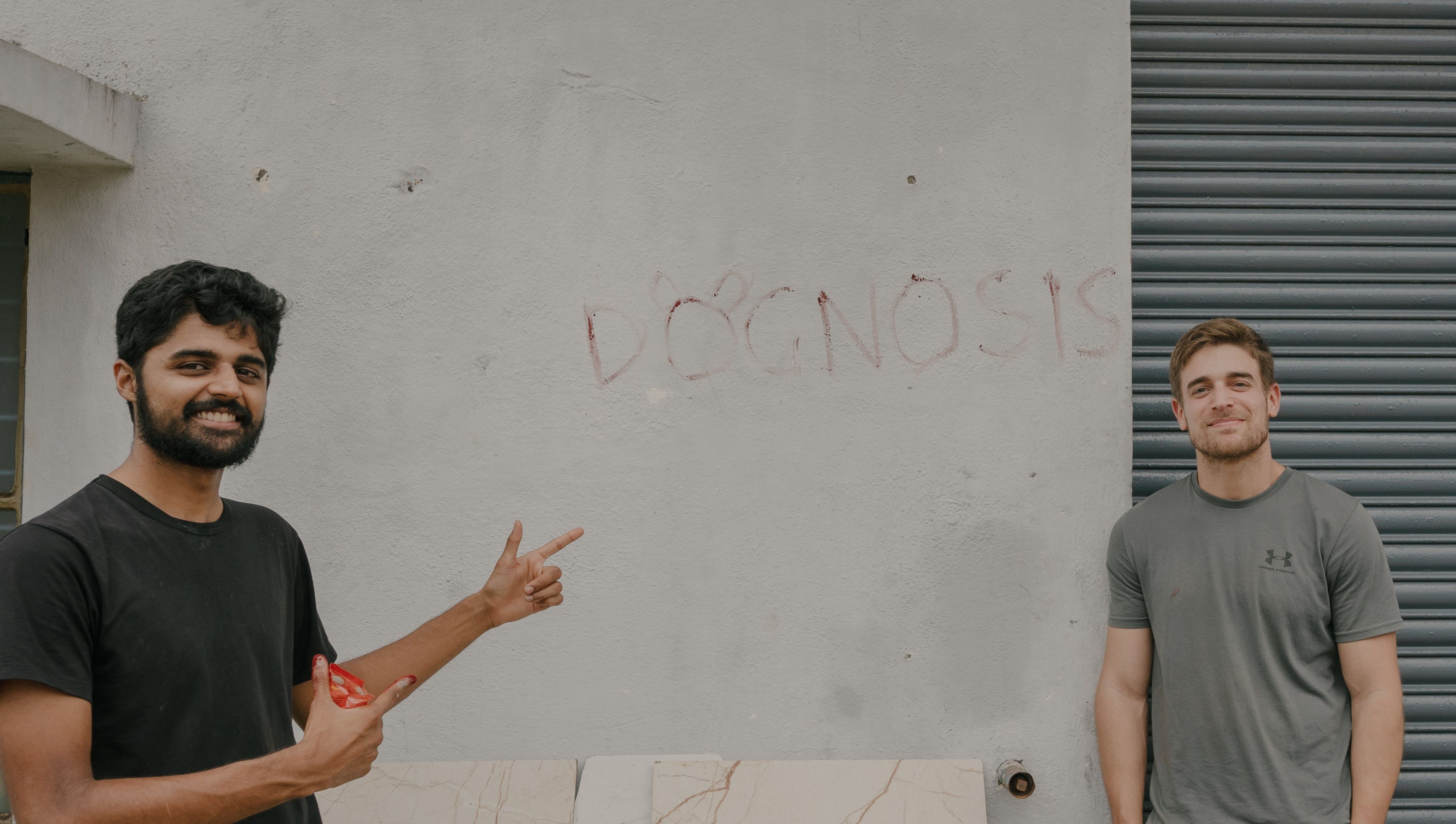
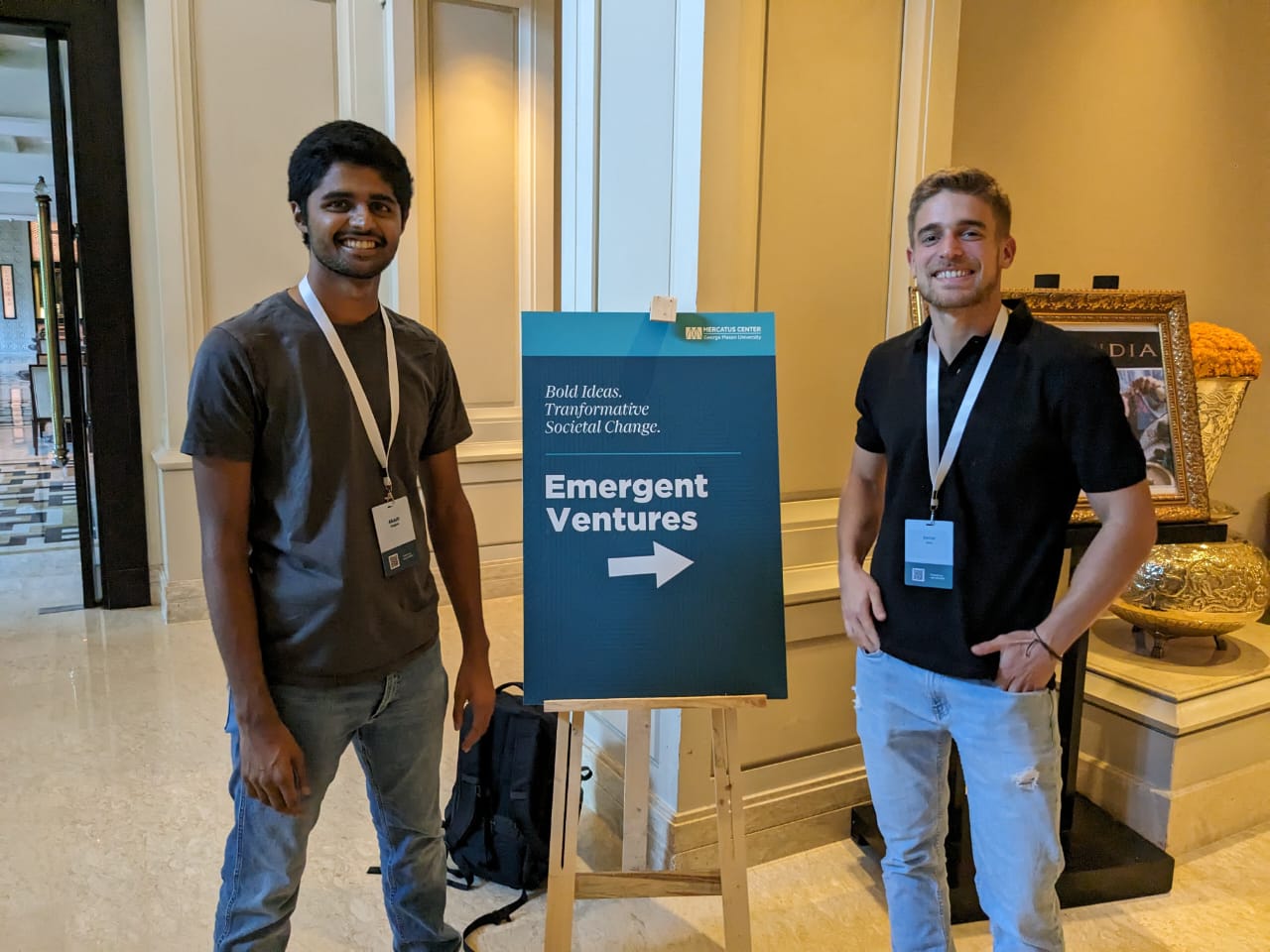
Six months after graduating from UC Berkeley, fuelled by an Emergent Ventures India grant, Akash set off to Israel for a visiting researcher stint at the Tech4Animals lab at the University of Haifa. Around the same time, Itamar was beginning to disengage from Prognose and making plans to travel in India. He had succeeded in validating the ability of the lab's Labradors to sniff out breast cancer and Parkinson's in two clinical trials, but had grown disillusioned with the positioning and business development, or lack thereof. Given the hyper-connected networks of Israel and the nicheness of the field, it was inevitable the two would connect, in April 2023, though funnily enough, they switched countries before they first spoke to each other, as Itamar had already arrived in India.
Over a series of Zoom conversations, often including Akash's father Dr. Shashikant Kulgod, concrete plans to start Dognosis began to take shape. India seemed the obvious place to set up kennels, given the vast population, strong medical infrastructure, high talent density, low costs, and a pre-existing network. Boosted by a second Emergent Ventures India grant, this time as a team, Dognosis truly set their paws on the ground in August 2023.
The rest, as they say, is the future.
Here's to the future.